I was a full professor in computer science at UC San Diego from 2002-2018. Since 2018
I am Professor Emeritus at UC San Diego. In 2019 I became Honorary Professor at Aarhus
University. I am the Chief Scientist of Luxion makers
of KeyShot.

|
Practical Error Estimation for Denoised Monte Carlo Image Synthesis".
Arthur Firmino, Ravi Ramamoorthi, Jeppe Revall Frisvad, and Henrik Wann Jensen
Proceedings of SIGGRAPH 2024
|

|
"NeuPreSS: compact neural precomputed subsurface scattering for distant lighting of heterogeneous translucent objects".
Thomson TG, Jeppe Revall Frisvad, Ravi Ramamoorthi, Henrik Wann Jensen
Computer Graphics Forum (PG 2024) 43(7). October 2024.
|

|
"Neural SSS: lightweight object appearance representation".
Thomson TG, Duc Minh Tran, Henrik Wann Jensen, Ravi Ramamoorthi, Jeppe Revall Frisvad
Computer Graphics Forum (EGSR 2024) 43(4), Article e15158. July 2024
|

|
"Denoising-Aware Adaptive Sampling for Monte Carlo Ray Tracing".
Arthur Firmino, Jeppe Revall Frisvad, and Henrik Wann Jensen
Proceedings of SIGGRAPH 2023
|

|
"Practical temporal and stereoscopic filtering for real-time ray tracing".
Henrik Philippi, Jeppe Revall Frisvad, and Henrik Wann Jensen
Eurographics Symposium on Rendering (EGSR 2023)
|

|
"Progressive Denoising of Monte Carlo Rendered Images".
Arthur Firmino, Jeppe Revall Frisvad, and Henrik Wann Jensen
Eurographics, 2022
|

|
"Hierarchical Neural Reconstruction for Path Guiding Using Hybrid Path and Photon Samples".
Shilin Zhu, Zexiang Xu, Tiancheng Sun, Alexandr Kuznetsov, Mark Meyer, Henrik Wann Jensen, Hao Su, and Ravi Ramamoorthi
ACM Transactions on Graphics (Proceedings of SIGGRAPH 2021) |
|
"Practical Ply-Based Appearance Modeling for Knitted Fabrics".
Zahra Montazeri, Søren B. Gammelmark, Henrik Wann Jensen, and Shuang Zhao
Eurographics Symposium on Rendering, 2021
|

|
"Photon-Driven Neural Reconstruction for Path Guiding".
Shilin Zhu, Zexiang Xu, Tiancheng Sun, Alexandr Kuznetsov, Mark Meyer, Henrik Wann Jensen, Hao Su, and Ravi Ramamoorthi
ACM Transactions on Graphics, January 2021
|

|
"Practical Ply-Based Appearance Model of Woven Fabrics".
Zahra Montazeri, Søren B. Gammelmark, Shuang Zhao, and Henrik Wann Jensen
ACM Transactions on Graphics (SIGGRAPH Asia 2020), 39(6) November 2020
|

|
"Photon-Driven Neural Path Guiding".
Shilin Zhu, Zexiang Xu, Tiancheng Sun, Alexandr Kuznetsov, Mark Meyer, Henrik Wann Jensen, Hao Su, and Ravi Ramamoorthi
arXiv.2010.01775, Oct 2020
|

|
"Deep Kernel Density Estimation for Photon Mapping".
Shilin Zhu, Zexiang Xu, Henrik Wann Jensen, Hao Su, and Ravi Ramamoorthi
Eurographics Symposium on Rendering 2020, June 2020
|

|
"Connecting Measured BRDFs to Analytic BRDFs by Data-Driven Diffuse-Specular Separation".
Tiancheng Sun, Henrik Wann Jensen, and Ravi Ramamoorthi
ACM Transactions of Graphics (SIGGRAPH Asia 2018), November 2018
|

|
"Realistic Rendering in Architecture and Product Visualization".
Jaroslav Krivanek, Christophe Chevallier, Vladimir Koylazov, Ondrej Karlik, Henrik Wann Jensen, and Thomas Ludwig
Siggraph 2018 course, August 2018
|

|
"A BSSRDF Model for Efficient Rendering of Fur with Global Illumination".
Ling-Qi Yan, Weilun Sun, Henrik Wann Jensen, and Ravi Ramamoorthi
ACM Transactions of Graphics (SIGGRAPH Asia 2017), November 2017
|

|
"An Efficient and Practical Near and Far Field Fur Reflectance Model".
Ling-Qi Yan, Henrik Wann Jensen, and Ravi Ramamoorthi
ACM Transactions of Graphics (SIGGRAPH 2017), July 2017
|

|
"Minimal BRDF sampling for Two-Shot Near-Field Reflectance Acquisition".
Zexiang Xu, Jannik Boll Nielsen, Jiyang Yu, Henrik Wann Jensen, and Ravi Ramamoorthi
ACM Transactions of Graphics (SIGGRAPH Asia 2016), Nov. 2016
|

|
"Sparse Sampling for Image-Based SVBRDF Acquisition".
Jiyang Yu, Zexiang Xu, Matteo Mannino, Henrik Wann Jensen, and Ravi Ramamoorthi
Workshop on Material Appearance Modeling (2016)
|

|
"On Optimal, Minimal BRDF Sampling for Reflectance Acquisition".
Jannik Boll Nielsen, Henrik Wann Jensen, and Ravi Ramamoorthi
ACM Transactions of Graphics (SIGGRAPH Asia 2015), Nov. 2015
|

|
"Physically-Accurate Fur Reflectance: Modeling, Measurement and Rendering".
Ling-Qi Yan, Chi-Wei Tseng, Henrik Wann Jensen, and Ravi Ramamoorthi
ACM Transactions of Graphics (SIGGRAPH Asia 2015), Nov. 2015
|

|
"A Physically-Based BSDF for Modeling the Appearance of Paper".
Marios Papas, Krystle de Mesa, and Henrik Wann Jensen
Computer Graphics Forum (EGSR 2014), June 2014.
|

|
"A Practical Microcylinder Appearance Model for Cloth Rendering".
Iman Sadeghi, Oleg Bisker, Joachim De Deken, and Henrik Wann Jensen
ACM Transactions on Graphics (Volume 32, Issue 2), April 2013 (Presented at SIGGRAPH 2013)
|

|
"Practical Hessian-Based Error Control for Irradiance Caching".
Jorge Schwarzhaupt, Henrik Wann Jensen, and Wojciech Jarosz
ACM Transactions on Graphics (Proceedings of SIGGRAPH Asia 2012), Singapore, November 2012
|

|
"A Path Space Extension for Robust Light Transport Simulation".
Toshiya Hachisuka, Jacopo Pantaleoni, and Henrik Wann Jensen
ACM Transactions on Graphics (Proceedings of SIGGRAPH Asia 2012), Singapore, November 2012
|

|
"Noise Reduction for Progressive Photon Mapping".
Zhe Fu and Henrik Wann Jensen
SIGGRAPH 2012, Technical Talk, August 2012
|

|
"State of the Art in Photon Density Estimation".
Toshiya Hachisuka, Wojciech Jarosz, Guillaume Bouchard, Per H. Christensen, Jeppe Revall Frisvad, Wenzel Jakob, Henrik Wann Jensen,
Michael Kaschalk, Matthias Zwicker, Andrew Selle, and Ben Spencer
SIGGRAPH 2012 Course, Aug 2012
|
|
|
"A Path Space Extension for Robust Light Transport Simulation".
Toshiya Hachisuka, Jacopo Pantaleoni, and Henrik Wann Jensen
NVIDIA Technical Report, NVR-2012-001, April 2012
|

|
"Theory, Analysis and Applications of 2D Global Illumination".
Wojciech Jarosz, Volker Schönefeld, Leif Kobbelt, and Henrik Wann Jensen
ACM Transactions on Graphics (Volume 31, Issue 3), May 2012 (presented at SIGGRAPH 2012)
|

|
"Predicting the appearance of materials using Lorenz-Mie theory".
Jeppe R. Frisvad, Niels J. Christensen, and Henrik Wann Jensen
In "The Mie Theory: Basics and Applications" (Editors W. Hergert and T. Wriedt), Springer Series in Optical Sciences, Vol. 169, 2012
|

|
"Physically-Based Simulation of Rainbows".
Iman Sadeghi, Adolfo Munoz, Philip Laven, Wojciech Jarosz, Francisco Seron,
Diego Gutierrez, and Henrik Wann Jensen
ACM Transactions on Graphics (Volume 31, Issue 1), 2012
|

|
"Robust Adaptive Photon Tracing using Photon Path Vibility".
Toshiya Hachisuka and Henrik Wann Jensen
ACM Transactions on Graphics (Volume 30, Issue 5), 2011
|

|
"A Comprehensive Theory of Volumetric Radiance Estimation using Photon Points and Beams"
Wojciech Jarosz, Derek Nowrouzezahrai, Iman Sadeghi, and Henrik Wann Jensen
ACM Transactions on Graphics (Presented at SIGGRAPH 2011), Volume 30 Issue 1, January 2011
|

|
"A Progressive Error Estimation Framework for Photon Density Estimation"
Toshiya Hachisuka, Wojciech Jarosz, and Henrik Wann Jensen
ACM Transactions on Graphics (Proceedings of SIGGRAPH Asia 2010), Seoul, December 2010
|

|
"Parallel Progressive Photon Mapping on GPUs"
Toshiya Hachisuka and Henrik Wann Jensen
SIGGRAPH Asia 2010 Technical Sketches, Seoul, December 2010
|

|
"An Artist Friendly Hair Shading System"
Iman Sadeghi, Heather Pritchett, Henrik Wann Jensen, and Rasmus Tamstorf
ACM Transactions on Graphics (Proceedings of SIGGRAPH 2010), Los Angeles, July 2010
|

|
"The Race for Real-Time Photorealism"
Henrik Wann Jensen and Thomas Akenine-Möller
American Scientist, vol. 98, no. 2, March/April 2010
|

|
"A Error Estimation Framework for Photon Density Estimation"
Toshiya Hachisuka, Wojciech Jarosz, and Henrik Wann Jensen
SIGGRAPH 2010 Talk, Los Angeles, July 2010
|

|
"Scattering"
Diego Gutierrez, Henrik Wann Jensen, Wojciech Jarosz, and Craig Donner
SIGGRAPH Asia'2009 Courses, Yokohama, December 2009
|

|
"Stochastic Progressive Photon Mapping"
Toshiya Hachisuka and Henrik Wann Jensen
ACM Transactions on Graphics (Proceedings of SIGGRAPH Asia 2009), Yokohama, December 2009
|

|
"Coherent Path Tracing"
Iman Sadeghi, Bin Chen, and Henrik Wann Jensen
Journal of Graphics, GPU, and Game Tools, Volume 14, No. 2, 2009
|

|
"An Empirical BSSRDF Model"
Craig Donner, Jason Lawrence, Ravi Ramamoorthi, Toshiya Hachisuka, Henrik Wann Jensen, and Shree Nayar
ACM Transactions on Graphics (SIGGRAPH 2009), New Orleans, August 2009
|

|
"Importance Sampling Spherical Harmonics"
Wojciech Jarosz, Nathan Carr, and Henrik Wann Jensen
Computer Graphics Forum (Proceedings of Eurographics 2009), April 2009
|

|
"Progressive Photon Mapping"
Toshiya Hachisuka, Shinji Ogaki, and Henrik Wann Jensen
ACM Transactions on Graphics (Proceedings of SIGGRAPH Asia 2008), Singapore, December 2008
|

|
"Scattering"
Diego Gutierrez, Henrik Wann Jensen, Srinivasa Narasimhan, and Wojciech Jarosz
SIGGRAPH Asia'2008 Courses, Singapore, December 2008
|

|
"Irradiance Gradients in the Presence of Participating Media and Occlusions"
Wojciech Jarosz, Matthias Zwicker, and Henrik Wann Jensen
Computer Graphics Forum (Proceedings of Eurographics Symposium on Rendering), 2008
|

|
"Multidimensional Adaptive Sampling and Reconstruction for Ray Tracing"
Toshiya Hachisuka, Wojciech Jarosz, Richard Peter Weistroffer, Kevin Dale, Greg Humphreys, Matthias Zwicker, and Henrik Wann Jensen
ACM Transactions on Graphics (SIGGRAPH'2008)
|
|
|
"Advanced Global Illumination Using Photon Mapping"
Wojciech Jarosz, Henrik Wann Jensen, and Craig Donner
SIGGRAPH'2008 Class, Los Angeles, August 2008
|

|
"Practical Global Illumination With Irradiance Caching"
Jaroslav Krivanek, Pascal Gautron, Greg Ward, Henrik Wann Jensen, Per H. Christensen, and Eric Tabellion
SIGGRAPH'2008 Class, Los Angeles, August 2008
|

|
"The Beam Radiance Estimate for Volumetric Photon Mapping"
Wojciech Jarosz, Matthias Zwicker, and Henrik Wann Jensen
Computer Graphics Forum (Proceedings of Eurographics 2008), Vol. 27, No. 2, Crete, April 2008
|

|
"Radiance Caching for Participating Media"
Wojciech Jarosz, Craig Donner, Matthias Zwicker, and Henrik Wann Jensen
ACM Transactions on Graphics, Article 7, March 2008
|
|
|
"Computing the Scattering Properties of Participating Media using Lorenz-Mie Theory"
Jeppe Revall Frisvad, Niels Jørgen Christensen, and Henrik Wann Jensen
ACM Transactions on Graphics (SIGGRAPH'2007), Article 60, San Diego, August 2007
|

|
"Radiance Caching for Participating Media"
Wojciech Jarosz, Craig Donner, Matthias Zwicker, and Henrik Wann Jensen
SIGGRAPH 2007 sketch, San Diego, August 2007
|

|
"Rendering Translucent Materials using Photon Diffusion"
Craig Donner and Henrik Wann Jensen
Eurographics Symposium on Rendering, pages 243-253, Grenoble, June 2007
|
|
|
"High-Quality Rendering using Ray Tracing and Photon Mapping"
Henrik Wann Jensen and Per H. Christensen
SIGGRAPH'2007 Course 8, San Diego, August 2007
|
|
|
"Practical Global Illumination Using Irradiance Caching"
Jaroslav Krivanek, Pascal Gautron, Greg Ward, Okan Arikan, and Henrik Wann Jensen
SIGGRAPH'2007 Course 16, San Diego, August 2007
|

|
"A Spectral BSSRDF for Shading Human Skin"
Craig Donner and Henrik Wann Jensen
Eurographics Symposium on Rendering, pages 409-417, Cyprus, June 2006
|

|
"Acquiring Scattering Properties of Participating Media by Dilution"
Srinivasa Narasimhan, Mohit Gupta, Craig Donner, Ravi Ramamoorthi, Shree Nayar, and Henrik Wann Jensen
ACM Transactions on Graphics (SIGGRAPH'2006), Boston, pages 1003-1012, August 2006
|

|
"Analysis of Human Faces using a Measurement-Based Skin Reflectance Model"
Tim Weyrich, Wojciech Matusik, Hanspeter Pfister, Bernd Bickel, Craig Donner, Chien Tu, Janet McAndless, Jinho Lee, Addy Ngan, Henrik Wann Jensen, and Markus Gross
ACM Transactions on Graphics (SIGGRAPH'2006), Boston, pages 1013-1024, August 2006
|

|
"A Spectral Shading Model for Human Skin"
Craig Donner and Henrik Wann Jensen
SIGGRAPH 2006 Technical Sketch, Boston, August 2006
|

|
"Non-invasive scattering anisotropy measurement in turbid materials using non-normal incident illumination"
Neel Joshi, Craig Donner and Henrik Wann Jensen
Optics Letters 31, pages 936-938, 2006
|

|
"Rapid simulation of steady-state spatially-resolved reflectance and transmittance profiles of multi-layered turbid materials"
Craig Donner and Henrik Wann Jensen
Journal of Optical Society of America (JOSA A), pages 1382-1390, June 2006
|

|
"Light Diffusion in Multi-Layered Translucent Materials"
Craig Donner and Henrik Wann Jensen
ACM Transactions on Graphics (SIGGRAPH'2005), pages 1032-1039, Los Angeles, August 2005
|

|
"Precomputed Local Radiance Transfer for Real-Time Lighting Design"
Anders Wang Kristensen, Tomas-Akenine Möller, and Henrik Wann Jensen
ACM Transactions on Graphics (SIGGRAPH'2005), pages 1208-1215, Los Angeles, August 2005
|

|
"Wavelet Importance Sampling: Efficiently Evaluating Products of Complex Functions"
Petrik Clarberg, Wojciech Jarosz, Tomas-Akenine Möller, and Henrik Wann Jensen
ACM Transactions on Graphics (SIGGRAPH'2005), pages 1166-1175, Los Angeles, August 2005
|

|
"A Measurement-Based Skin Reflectance Model for Face Rendering and Editing"
Tim Weyrich, Wojciech Matusik, Hanspeter Pfister, Jung Lee, Addy Ngan, Henrik Wann Jensen, and Markus Gross
MERL Technical Report (TR2005-071), July 2005
|

|
"Interactive Rendering of Caustics using Interpolated Warped Volumes"
Manfred Ernst, Tomas Akenine-Möller, and Henrik Wann Jensen
Graphics Interface, pages 87-96, Victoria, Canada, May 2005
|

|
"Modeling of Hairy Plants"
Martin Fuhrer, Henrik Wann Jensen, and Przemyzlaw Prusinkiewicz
Pacific Graphics, pages 217-226, Seoul, South Korea, October 2004
|

|
"Perceiving Translucent Materials"
Roland W. Fleming, Henrik Wann Jensen, and Heinrich H. Buelthoff
First Symposium on Applied Perception in Graphics and Visualization,
pages 127-134, August 2004
|

|
"Non-linear kernel-based precomputed light transport"
Paul Green, Jan Kautz, Wojciech Matusik, Fredo Durand, and Henrik Wann Jensen
SIGGRAPH'2004 Technical Sketch
|

|
"Faster GPU computations using adaptive refinement"
Craig Donner and Henrik Wann Jensen
SIGGRAPH'2004 Technical Sketch
|

|
Rendering Techniques 2004
Edited by Alexander Keller and Henrik Wann Jensen
Eurographics Symposium on Rendering 2004, Sweden 2004
|

|
"Perceiving Translucent Materials"
Roland W. Fleming, Edward H. Adelson, Heinrich H. Buelthoff,
and Henrik Wann Jensen
Abstract + Talk at the Vision Sciences Society 2004
|

|
"A Practical Guide to Ray Tracing and Photon Mapping"
Henrik Wann Jensen
SIGGRAPH'2004 Course 19, Los Angeles, August 2004
|

|
"State of the Art in Monte Carlo Global Illumination"
Philip Dutre, Henrik Wann Jensen, Jim Arvo, Kavita Bala,
Philippe Bekaert, Steve Marschner, and Matt Pharr
SIGGRAPH'2004 Course 4, Los Angeles, August 2004
|

|
"Digital Face Cloning"
Henrik Wann Jensen
SIGGRAPH'2003 Technical Sketch, San Diego, July 2003
|

|
"Light Scattering from Human Hair Fibers"
Steve Marschner, Henrik Wann Jensen, Mike Cammarano, Steve Worley, and Pat Hanrahan
ACM Transactions on Graphics (SIGGRAPH'2003), pages 780-791, San Diego, July 2003
|

|
"Structured Importance Sampling of Environment Maps"
Sameer Agarwal, Ravi Ramamoorthi, Serge Belongie, and Henrik Wann Jensen
ACM Transactions on Graphics (SIGGRAPH'2003), pages 605-612, San Diego, July 2003
|

|
"Monte Carlo Ray Tracing"
Henrik Wann Jensen, Jim Arvo, Philip Dutre, Alexander Keller, Matt
Pharr, and Peter Shirley
SIGGRAPH'2003 Course, San Diego, July 2003
|

|
"Photon Mapping on Programmable Graphics Hardware"
Timothy J. Purcell, Craig Donner, Mike Cammarano, Henrik Wann Jensen,
and Pat Hanrahan
Graphics Hardware 2003, pages 41-50, San Diego, July 2003
|

|
Realistic Image Synthesis using Photon Mapping (Japanese
edition)
Henrik Wann Jensen
Japanese translation by Takeshi Naemura
ISBN: 4-274-07950-3. Omsha Ltd., 2002
|

|
"A Rapid Hierarchical Rendering Technique for Translucent Materials"
Henrik Wann Jensen and Juan Buhler
ACM Transactions on Graphics (SIGGRAPH'2002), vol. 21, issue 3, pages 576-581, San Antonio, July 2002
|

|
"Physically Based Modeling and Animation of Fire"
Duc Quang Nguyen, Ronald Fedkiw, and Henrik Wann Jensen
ACM Transactions on Graphics (SIGGRAPH'2002), vol. 21, issue 3, pages 721-728, San Antonio, July 2002
|

|
"A Practical Guide to Global Illumination using Photon Mapping"
Henrik Wann Jensen, Frank Suykens, Per Christensen, and Toshi Kato
SIGGRAPH'2002 Course 43, San Antonio, July 2002
|

|
"Time Dependent Photon Mapping"
Mike Cammarano and Henrik Wann Jensen
Proceedings of the 13th Eurographics Workshop on Rendering, Pisa, Italy, June 2002
|
|
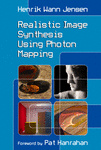
Realistic Image Synthesis using Photon Mapping
Henrik Wann Jensen
ISBN: 1-56881-140-7. AK Peters, 2001
2nd printing with corrections, March 2005
|

|
"A Practical Model for Subsurface Light Transport"
Henrik Wann Jensen, Steve Marschner, Marc Levoy, and Pat Hanrahan
Proceedings of SIGGRAPH'2001, pages 511-518, Los Angeles, August 2001
|

|
"A Physically-Based Night Sky Model"
Henrik Wann Jensen, Fredo Durand, Michael M. Stark, Simon Premoze, Julie
Dorsey, and Peter Shirley
Proceedings of SIGGRAPH'2001, pages 399-408, Los Angeles, August 2001
|

|
"Visual Simulation of Smoke"
Ronald Fedkiw, Jos Stam, and Henrik Wann Jensen
Proceedings of SIGGRAPH'2001, pages 15-22, Los Angeles, August 2001
|

|
"A
Practical Guide to Global Illumination using Photon Mapping"
Henrik Wann Jensen, Frank Suykens, and Per Christensen
SIGGRAPH'2001 Course 38, Los Angeles, August 2001
|

|
"State
of the Art in Monte Carlo Ray Tracing for Realistic Image Synthesis"
Henrik Wann Jensen, Jim Arvo, Marcos Fajardo, Pat Hanrahan, Don Mitchell, Matt
Pharr, and Peter Shirley
SIGGRAPH'2001 Course 29, Los Angeles, August 2001
|

|
"A
Practical Guide to Global Illumination using Photon Maps"
Henrik Wann Jensen and Niels Jørgen Christensen
SIGGGRAPH 2000 Course notes 8, New Orleans, July 2000
|

|
"Practical
Parallel Processing for Realistic Rendering"
Tim Davis, Alan Chalmers, and Henrik Wann Jensen
SIGGGRAPH 2000 Course notes 30, New Orleans, July 2000
|

|
"Night Rendering"
Henrik Wann Jensen, Simon Premoze, Peter Shirley, William Thompson,
Jim Ferwerda, and Michael Stark
Tech. Rep. UUCS-00-016, Computer Science Department,
University of Utah, August 2000
|

|
"Global Illumination Test Scenes"
Brian Smits and Henrik Wann Jensen
Tech. Rep. UUCS-00-013, Computer Science Department,
University of Utah, June 2000
|

|
"Ray Tracing Point Sampled Geometry"
Gernot Schaufler and Henrik Wann Jensen
Rendering Techniques 2000. Eds. Peroche and Rushmeier.
Springer-Verlag, pages 319-328, 2000
|

|
"Global Illumination Test Scenes"
Henrik Wann Jensen and Brian Smits
Abstract for Dagstuhl Seminar on Rendering, June 2000
|

|
"A Practical Guide to Global Illumination using Photon Maps"
Henrik Wann Jensen and Niels Jørgen Christensen
Technical report, ISBN-87-90125-01-0. Dept. of Graphical
Communication. Technical University of Denmark, April 2000
|

|
"Rendering of Wet Materials"
Henrik Wann Jensen, Justin Legakis, and Julie Dorsey
In "Rendering Techniques '99". Eds. D. Lischinski and
G. W. Larson. Springer-Verlag, pages 273-282, 1999
|

|
"Modeling and Rendering of Weathered Stone"
Julie Dorsey, Alan Edelman, Henrik Wann Jensen,
Justin Legakis, and Hans Køhling Pedersen
Proceedings of SIGGRAPH'99, pages 225-234, Los Angeles, August 1999
|

|
"Efficient Simulation of Light Transport in Scenes
with Participating Media using Photon Maps"
Henrik Wann Jensen and Per H. Christensen
Proceedings of SIGGRAPH'98, pages 311-320, Orlando, July 1998
|

|
"Adaptive Sampling and Bias Estimation in Path Tracing"
Rasmus Tamstorf and Henrik Wann Jensen
In "Rendering Techniques '97". Eds. J. Dorsey and
Ph. Slusallek. Springer-Verlag, pages 285-295, 1997
|

|
"Rendering Caustics on Non-Lambertian Surfaces"
Henrik Wann Jensen
Computer Graphics Forum, vol. 16 (1), pages 57-64, March 1997
|

|
"The Photon Map in Global Illumination"
Henrik Wann Jensen
PhD dissertation, September 1996
|

|
"Procedural Modelling: Rendering Hypertextures" (in Danish)
Henrik Wann Jensen
Technical Report, Dept. of Graphical Communication, Aug. 1996
|

|
"Global Illumination using Photon Maps"
Henrik Wann Jensen
In "Rendering Techniques '96". Eds. X. Pueyo and
P. Schröder. Springer-Verlag, pages 21-30, 1996
|

|
"Reducing the Complexity of Medical 3D Surface Models for Interactive Analysis"
Philip Dam Lind and Henrik Wann Jensen
Proceedings of CAR'96, pages 1011, 1996
|

|
"Global Illumination using Photon Maps"
Henrik Wann Jensen
Abstract for Dagstuhl Seminar on Rendering, pages 18, June 1996
|

|
"Rendering Caustics on Non-Lambertian Surfaces"
Henrik Wann Jensen
Proceedings of Graphics Interface '96, pages 116-121, Toronto, May 1996
|

|
"Efficiently Rendering Shadows using the Photon Map"
Henrik Wann Jensen and Niels Jørgen Christensen
Proceedings of Compugraphics '95, pages 285-291, Alvor, December 1995
|

|
"Importance Driven Path Tracing using the Photon Map"
Henrik Wann Jensen
In "Rendering Techniques '95". Eds. P.M. Hanranhan and W. Purgathofer.
Springer-Verlag, pages 326-335, 1995
|

|
"Optimizing Path Tracing using Noise Reduction Filters"
Henrik Wann Jensen and Niels Jørgen Christensen
Proceedings of WSCG95, pages 134-142, Plzen, February 1995
|

|
"Photon Maps in Bidirectional Monte Carlo Ray Tracing of Complex Objects"
Henrik Wann Jensen and Niels Jørgen Christensen
Computers & Graphics vol. 19 (2), pages 215-224, March 1995
|

|
"Global Illumination - using Bidirectional Monte Carlo Ray Tracing"
Henrik Wann Jensen
Master Thesis. Dept. of Graphical Communication, 1993. (in Danish)
|

|
"Radiosity"
Henrik Wann Jensen
Technical Report. Dept. of Graphical Communication, 1992. (in Danish)
|